Nikon Coolpix Converter Lenses
By DAVE ETCHELLS and MIKE PASINI
BOOKMARKS
Specifications Table
What's a Converter?
Lens Defects
Caveats
Sample Shots:
- Nikon
- Eagle Eye
Review Date: June 2001
(Dave took the test shots and wrote up some notes on the OptiZoom. Mike put the pieces together and added a couple of his favorite converter shots.)The Nikon Coolpix 900, 900s, 950, 990 and 880 models enjoy not only an excellent internal zoom lens with remarkable macro capability but an extensive line of optional lenses.
These lenses range from a fish-eye offering 183 degrees of coverage to a 3-time teleconverter offer 7 degrees. They all screw on to the front of the zoom lens (although the Coolpix 880 requires a UR-E2 step-down ring), instantly converting the internal optics to a new view. Some Coolpix models even include special modes in their setup options for the converters.
This well-integrated suite of optional lenses currently includes:
Converter Product Lenses/
GroupsMagnification Combined (1)
Focal LengthAngle Filter Size Fish-Eye FC-E8 5/4 0.21 (8-24mm) 183 NA Wide-Angle (2) WC-E24 2/2 0.66 (24-72mm) 88 48mm Wide-Angle (3) WC-E63 4/4 0.63 (24-72mm) 84 72mm Internal Zoom Nikon 990 9/8 1.00 8-24mm (38-115mm) 28mm 2x-Tele TC-E2 4/3 2.00 (76-230mm) 11 62mm 3x-Tele TC-E3ED 6/3 3.00 (114-345mm) 7 72mm (1) Focal lengths in parentheses are 35mm equivalents
(2) Discontinued
(3) On the Coolpix 8800 combined focal length is 24-60mmEach comes with front and rear lens caps and a soft case.
Imaging Resource has also tested the 5x OptiZoom teleconverter manufactured in England by Eagle Eye (http://www.eagleeyeuk.com/).
All of our tests were done with either a Nikon Coolpix 990 or 950.
WHAT'S A CONVERTER?
You can't remove the Coolpix zoom lens like you can remove a 35mm lens from an SLR, but that doesn't mean you can't change its focal length. All you have to do is screw one of the optional lenses to the front of the sealed, internal zoom lens to change it's focal length.
The Coolpix 990's internal nine-element eight-group zoom, equivalent to a 38-115mm zoom range in 35mm, has in fact an 8-24mm focal length.
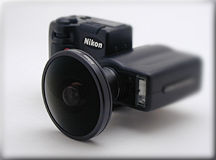
The Fish-eye Converter You can use a focal length modifier of 4.75 to convert from the 990 focal lengths to 35mm equivalents (eg: the 8mm 990 internal wide angle times 4.75 equals a 38mm wide angle in 35mm format). We'll put the 35mm equivalents in parentheses.
But wait! What does focal length measure anyway?
It measures the distance from the "middle" of the lens (its rear nodal point, in fact) to the plane behind the lens where images at infinity come into focus.
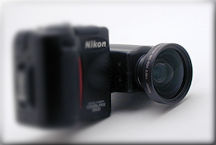
The Wide Angle Converter Knowing the focal length of a lens tells us two things.
First, it tells us how much of the scene the lens embraces. An 8mm focal length lens embraces a great deal more than a 24mm focal length lens. It's wide angle compared to telephoto.
Measured in degrees, this is called the angle of view. Our eyes have an angle of view of about 48 degrees. A lens is considered telephoto if its angle of view is 35 degrees or less. More than 65 degrees is considered wide angle.
The 3x teleconverter sees 7 degrees while the 2x teleconverter sees 11 degrees. The Nikon wide angle converter (WC-E63) sees, in contrast, 84 degrees. While the Nikon fisheye converter (FC-E8) sees 183 degrees. The longer the focal length, the narrower the angle of view is.
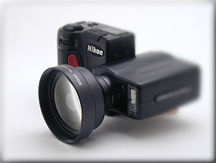
The 2x Teleconverter The second thing focal length tells us is how large the image will be on the focal plane. Where the CCD is.
We say the 3x teleconverter _triples_ the focal length of the internal zoom because the image size will be three times bigger on the CCD when you use this teleconverter. The 8mm wide angle setting becomes a 24mm zoom setting (115mm 35mm equivalent), which starts where the internal 8-24mm zoom leaves off. And the 24mm setting becomes a 72mm zoom (345mm).
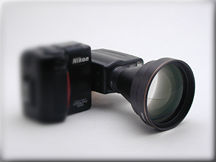
The 3x Teleconverter The bad news is that your manufacturer's matched converters aren't inexpensive. And they vary in quality.
Putting more glass in the path between your subject and your image can degrade image quality and decrease the maximum effective aperture so you need a lot of light to get the shot. Nikon's 3x teleconverter, consequently, has a 72mm front element to gather as much light as practical. So money spent on quality in a converter is well spent. Less light is lost.
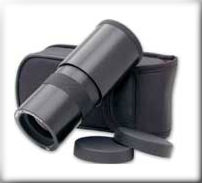
The 5x OptiZoom But there are alternatives (http://www.tiffen.com) worth exploring, particularly if your manufacturer doesn't offer a converter for your digicam.
LENS DEFECTS
No lens is perfect, and it's a good thing. By definition, a lens is a distorted view of what we normally see. That distortion should be managed, of course, and careful photographers should be aware of both the strengths and weaknesses of their tools. Often stopping down will minimize the imperfections. But the desire for a perfect lens is one of those things that reminds us to be careful of what we wish for.
So we don't speak of defects but of aberrations. Which reminds us of the sort of people you might invite to a party. There are seven distinct types.
Spherical aberration. Like last-minute invitees who arrive early, spherical aberration occurs when light passing through the edges of a lens focuses short of light passing through the center of the lens. This edge softness is handy in portrait work. Stopping down, however, often causes a focus shift.
Chromatic aberration. Well, not everyone speaks the same language. Different colors of light refract -- or bend -- differently as they pass through glass. You may see this as softness on the lens axis (where focus is short or long depending on color) or as color fringes off axis. Stopping down improves off-axis chromatic aberration.
Coma. Some party conversation never seems to get to the point. Coma is a bit like that. Instead of sharply focusing a subject off the lens axis, some lenses blur the image into a comet-like shape. Stopping down helps.
Curvature of field. Reminds us of the guy at every party who puts on a lampshade for laughs. Probably the most frequently seen, this aberration turns the flat subject into a bowed one. You may have tried to shoot a framed painting only to see your frame bursting in the print, or a flat horizon only to see the apparent curvature of the earth. It's the lens, in fact. Stopping down helps.
Astigmatism. Liar, liar, an astigmatic lens focuses an off-axis subject as a line at one point and another line perpendicular to it at another point with a disc in between. Which makes it hard to get both horizontal and vertical lines in focus at the edges of the image. Stopping down reduces the effect.
Distortion. A lens with only one element or piece of glass will barrel an image if the aperture is in front of it and pincushion it if is it's behind it. Stopping down doesn't help, but lens designers work around this by using an element or so on either side of the aperture.
Unequal illumination. Like trying to hear someone over loud music, light travelling from the edge of the lens has to go further than light going through the center of the lens. And some of that edge light is actually cut off by the barrel of the lens. Two reasons illumination isn't even across the film plane (your eyes, being curved not flat, don't have this problem). A bigger front element (as in Nikon's 72mm optional lenses) helps here.
Nikon, which even makes its own glass, has done a remarkable job minimizing aberrations in its optional lenses. Eagle Eye tolerates more aberration to gain exceptional magnification.
CAVEATS
Attaching any of these converters to a Coolpix blocks the flash sensor. All of them except the discontinued WC-E24 block the flash, too. So you lose use of the onboard flash.
You'll also be restricted to using the Coolpix LCD monitor to compose your shots because the optical viewfinder is obstructed just as the flash is. It wouldn't give you a true composition of the converted scene anyway.
We find both problems minor in actual use. But most of our work is composed on the LCD in natural light.
SAMPLE SHOTS
We took two kinds of sample shots. Dave took distant shots with all five converters, showing their various angles of view and magnification. Mike focused on nearby subjects using a wide angle and the 3x teleconverter (you can read the story about his shoot in the Jan. 28, 2001 issue at http://www.imaging-resource.com/IRNEWS/). You can view the contact sheet for any converter or see some side-by-side comparisons below.
NIKON CONVERTERS
The wide-angle converter used in all these shots is the discontinued WC-E24. It has been replaced by the WC-E63.
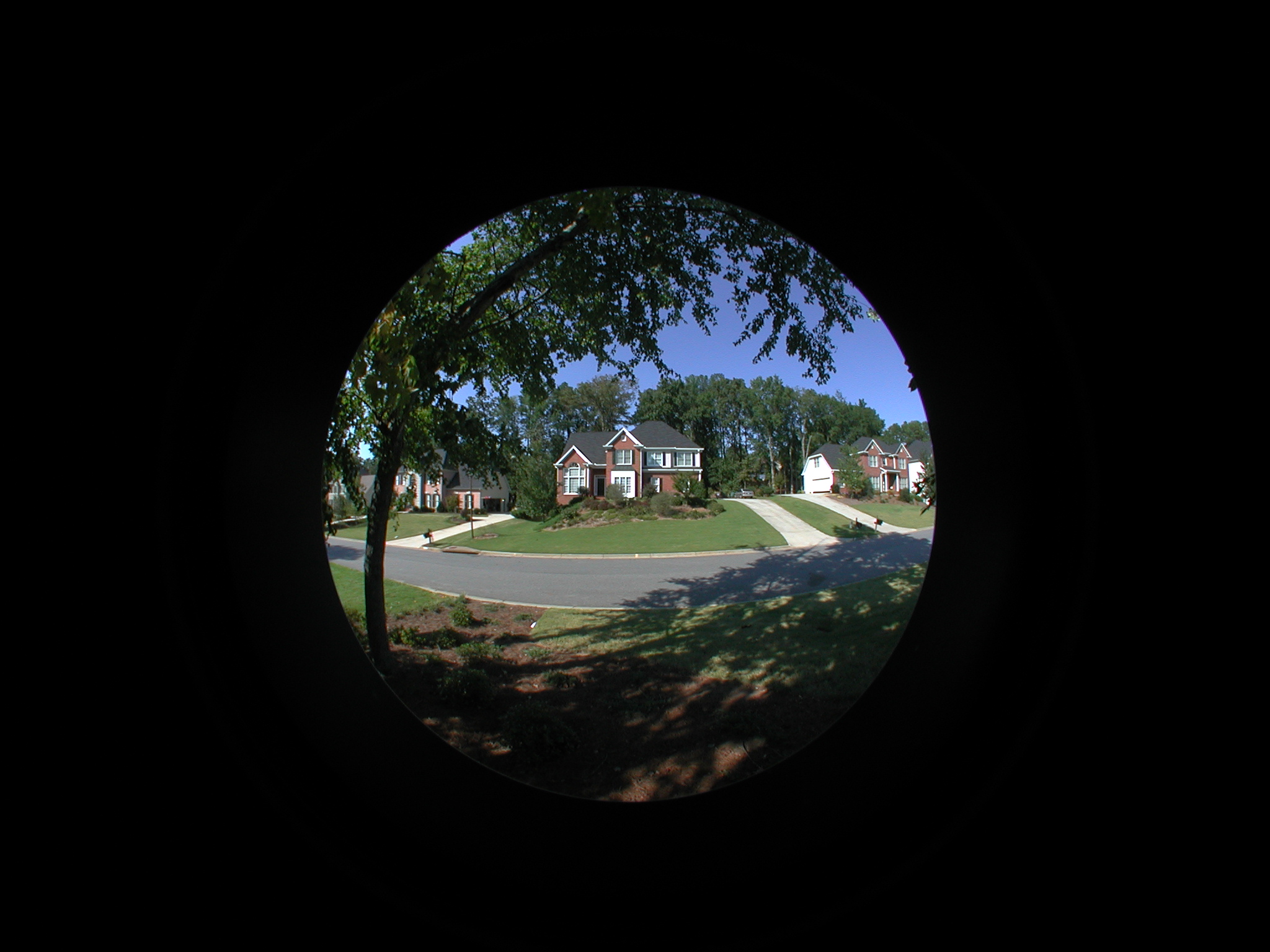
WIDE ANGLE C99 indicates the Coolpix 990. C95 indicates the Coolpix 950. WT stands for Wide/Tele to segregate shots showing zoom range Fisheye - Contact Sheet C99WTFE1 This is the fisheye, in the full "bubble" fisheye setting
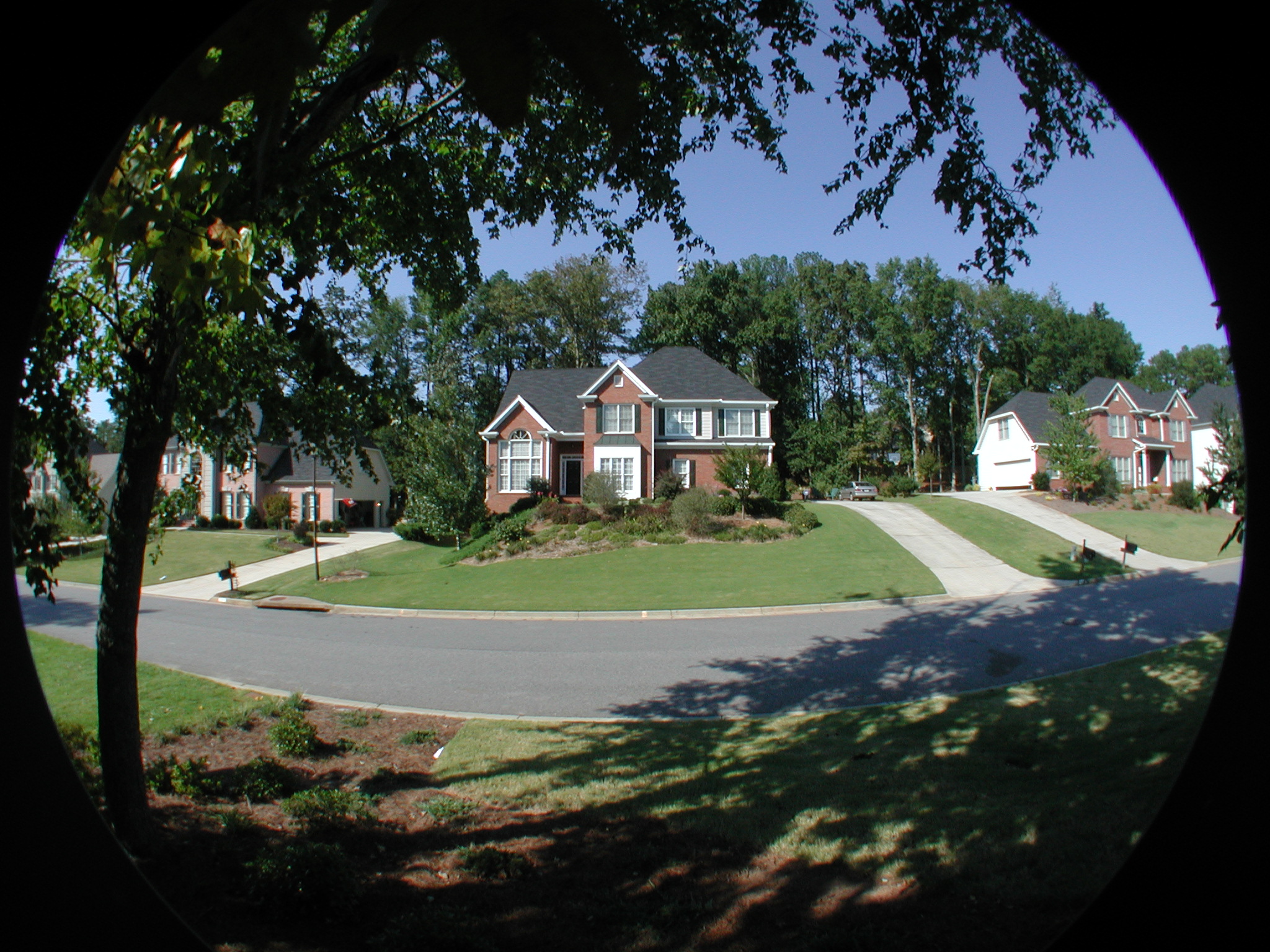
C99WTFE2 Setting two, gives an almost full-frame fisheye effect
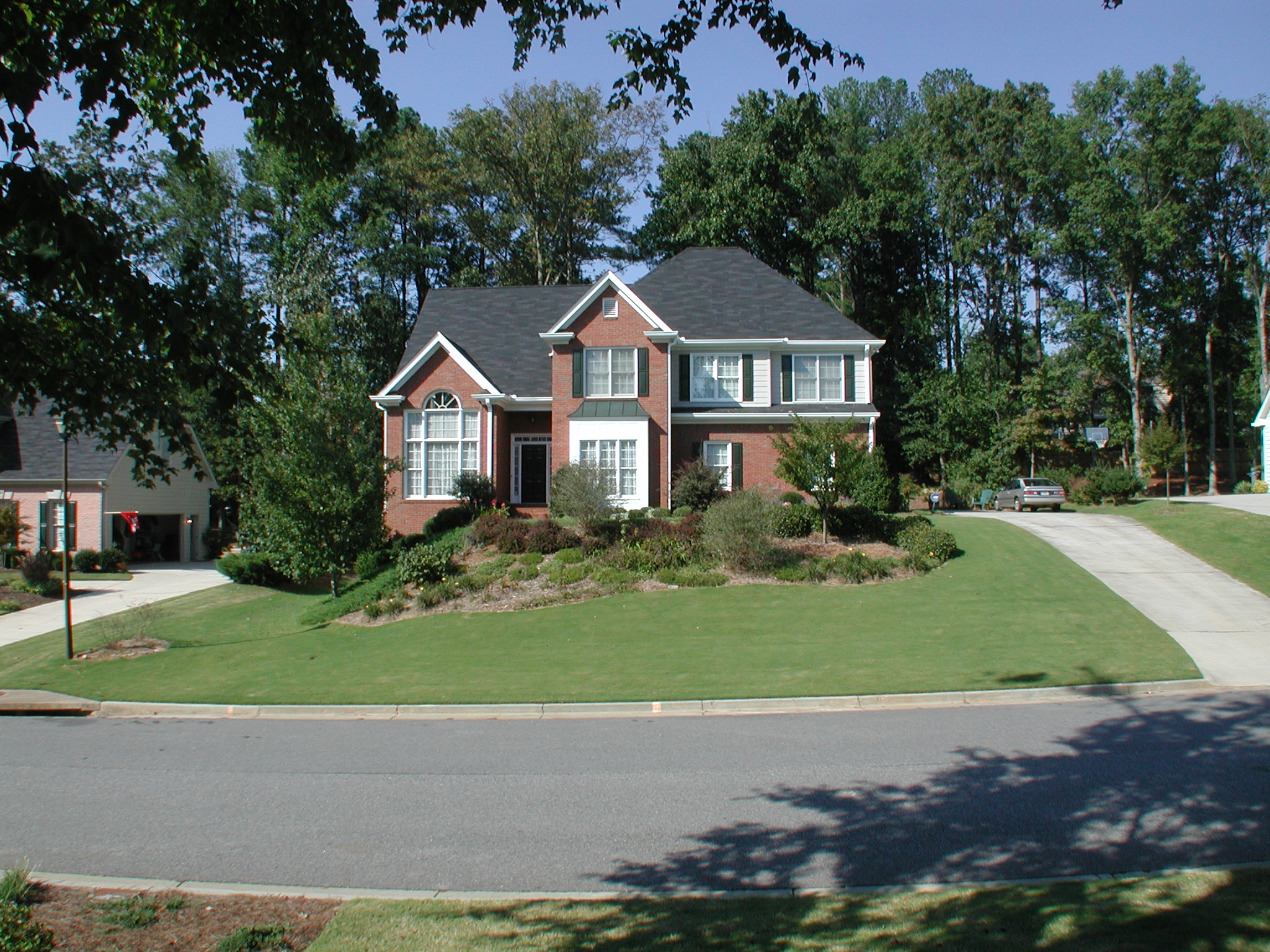
Wide Angle - Contact Sheet C95WTWA With the WC-E24 Wide Angle adapter
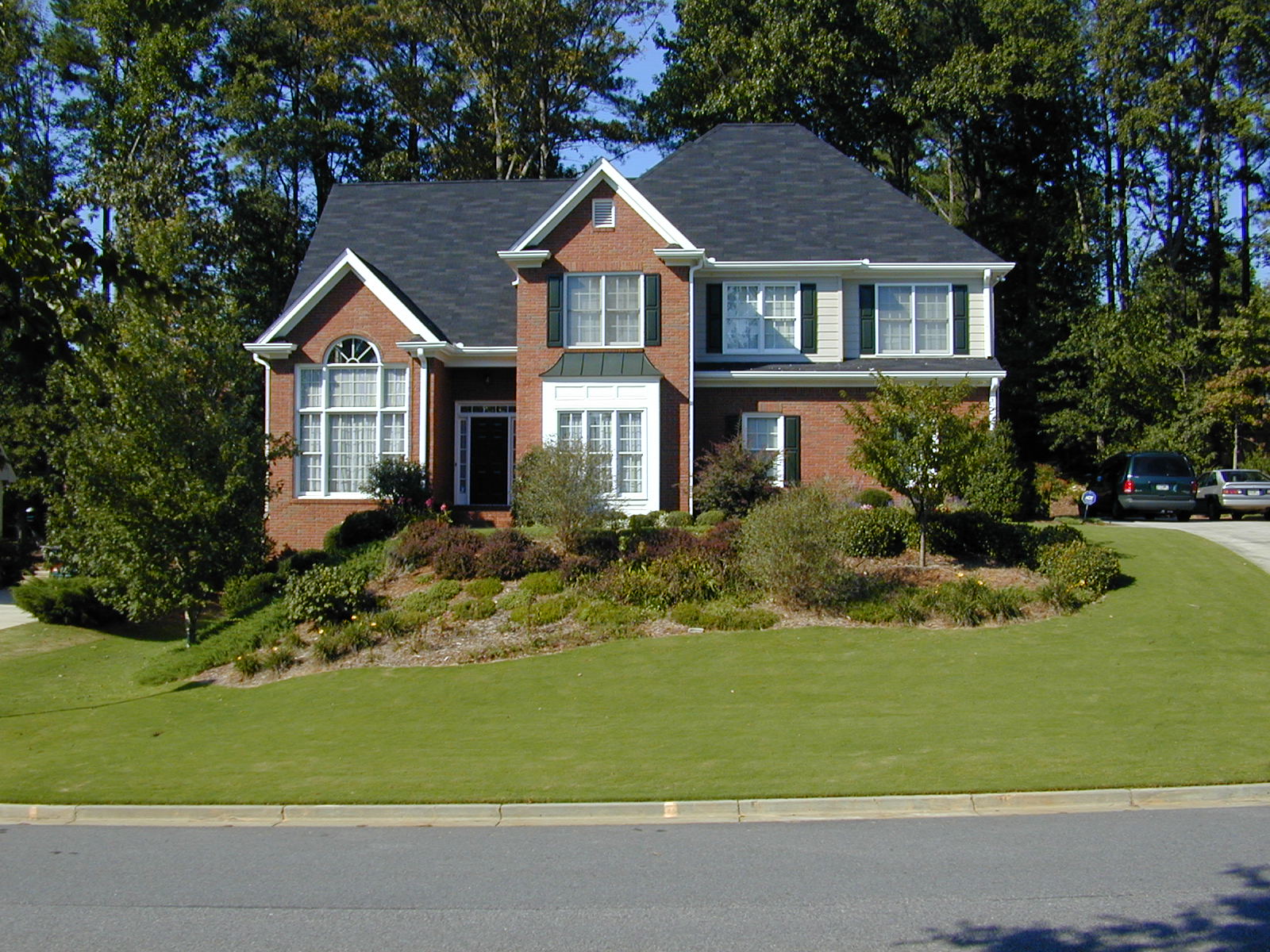
C95WTW Built-in zoom at wide angle
MPWACU Mike's shot using the discontinued WC-E24 Wide Angle showing close-up detail and distant sharpness Copyright 2000 by Mike Pasini
TELEPHOTO C99 indicates the Coolpix 990. C95 indicates the Coolpix 950. WT stands for Wide/Tele to segregate shots showing zoom range WTT Built-in zoom at telephoto
2x Converter - Contact Sheet C95WTT2XA 2x adapter
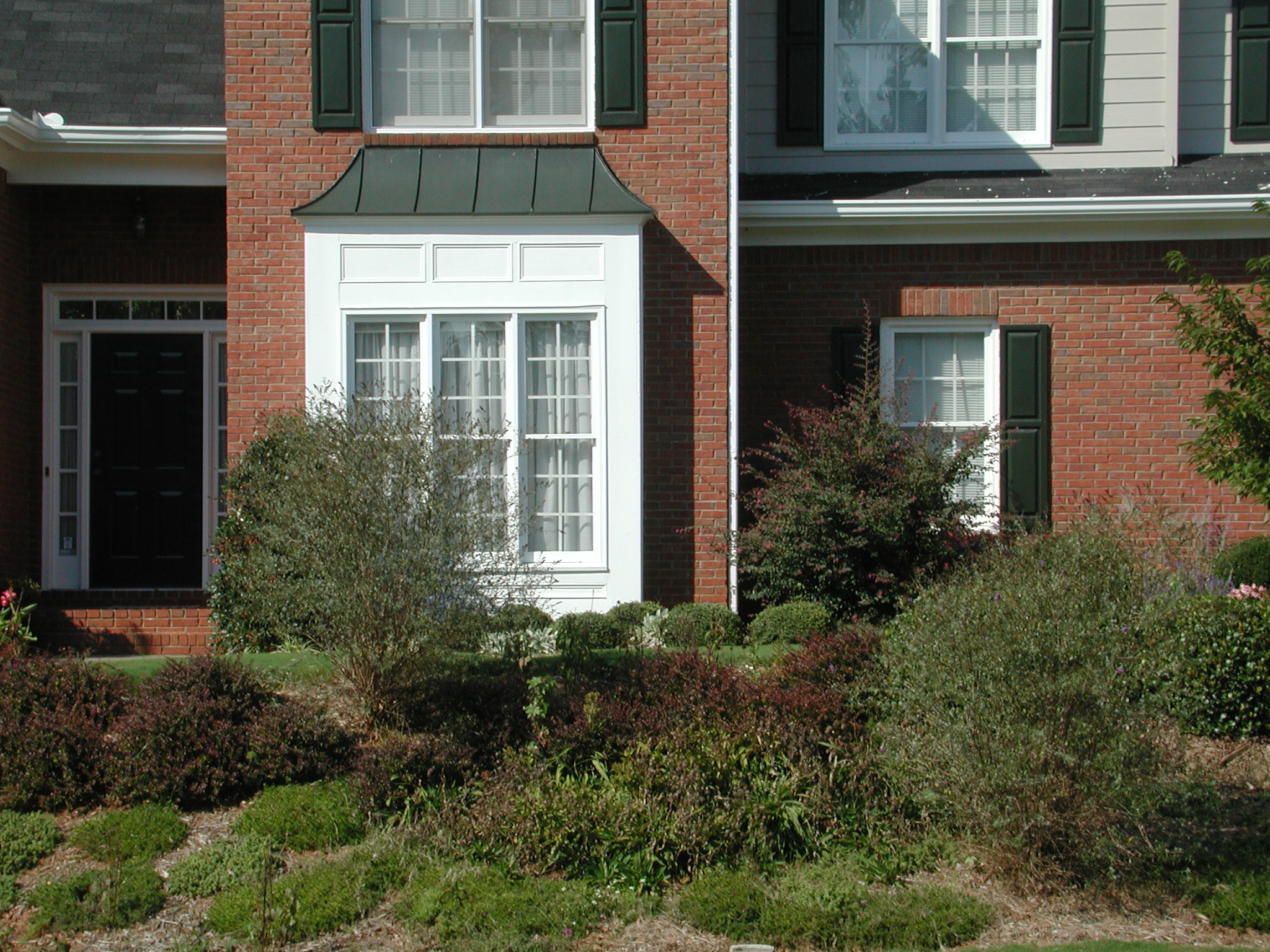
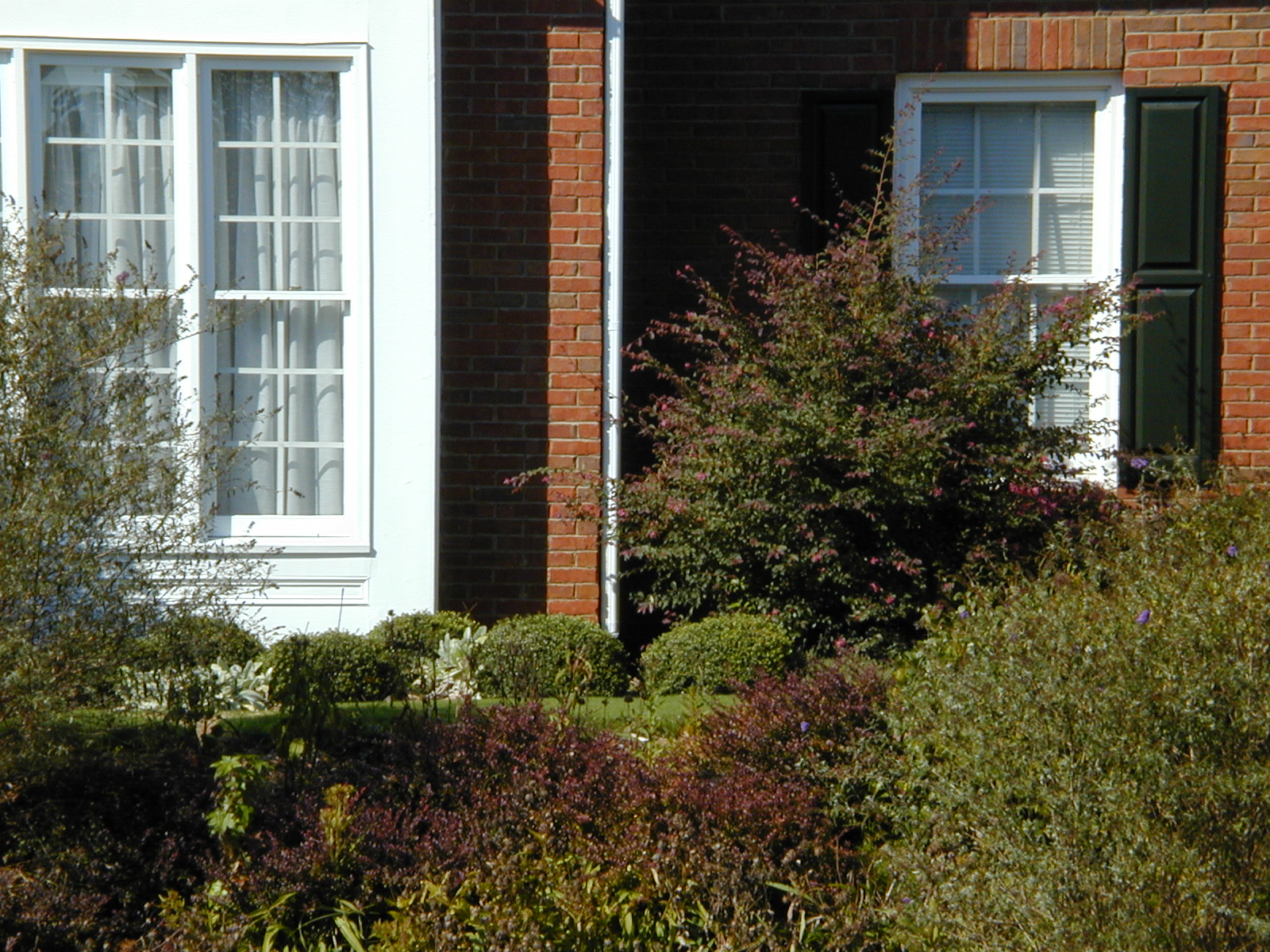
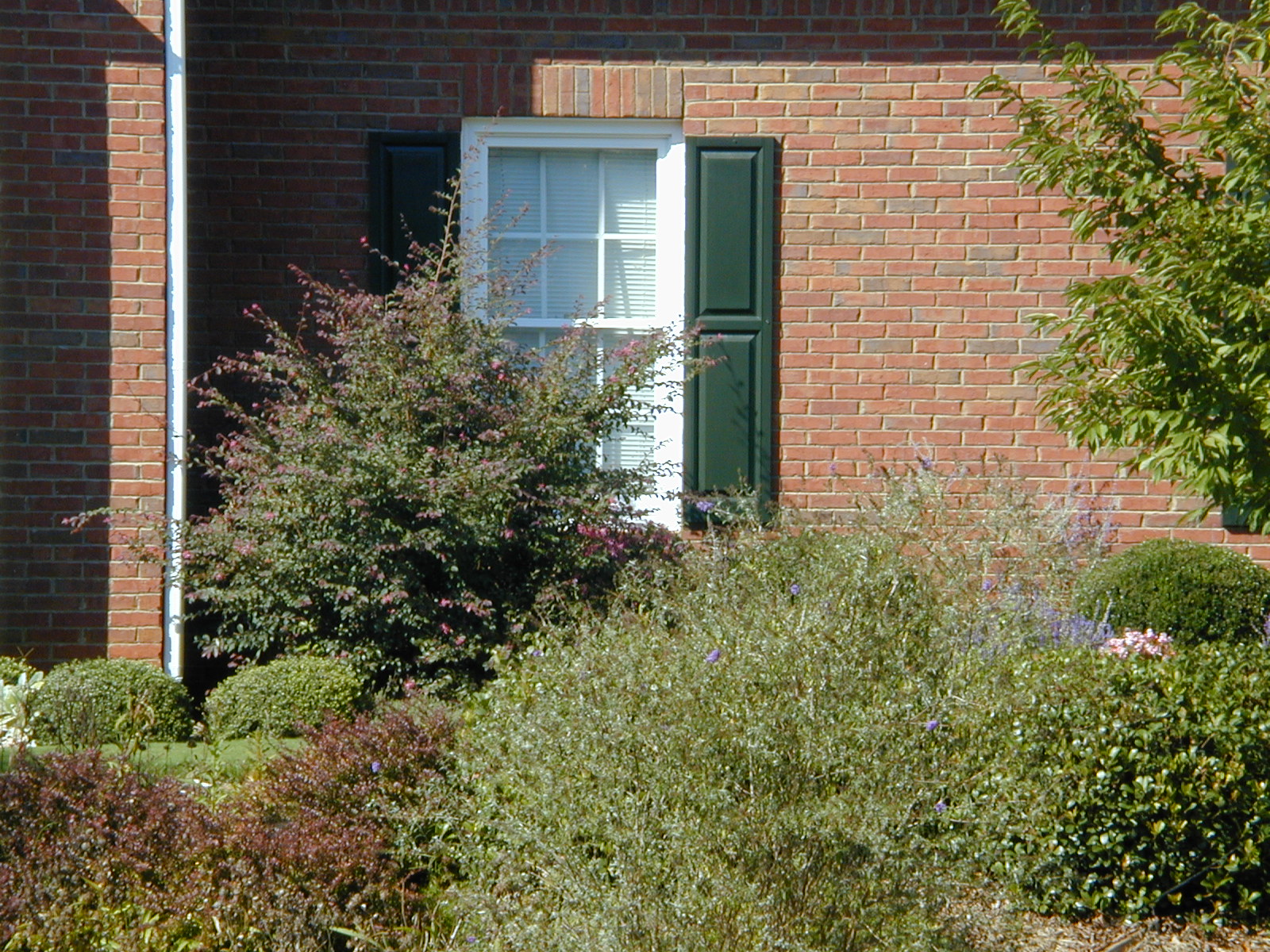
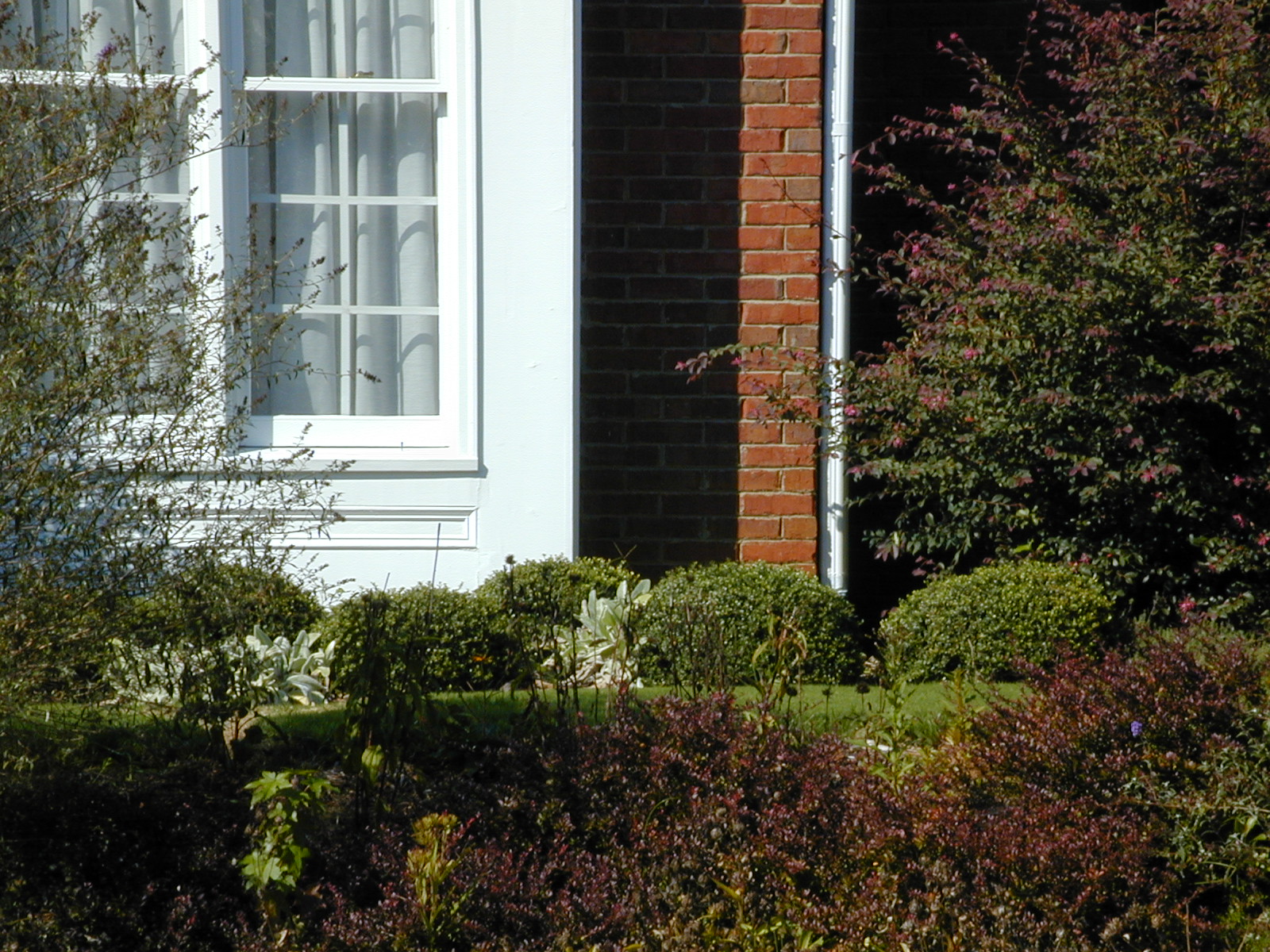
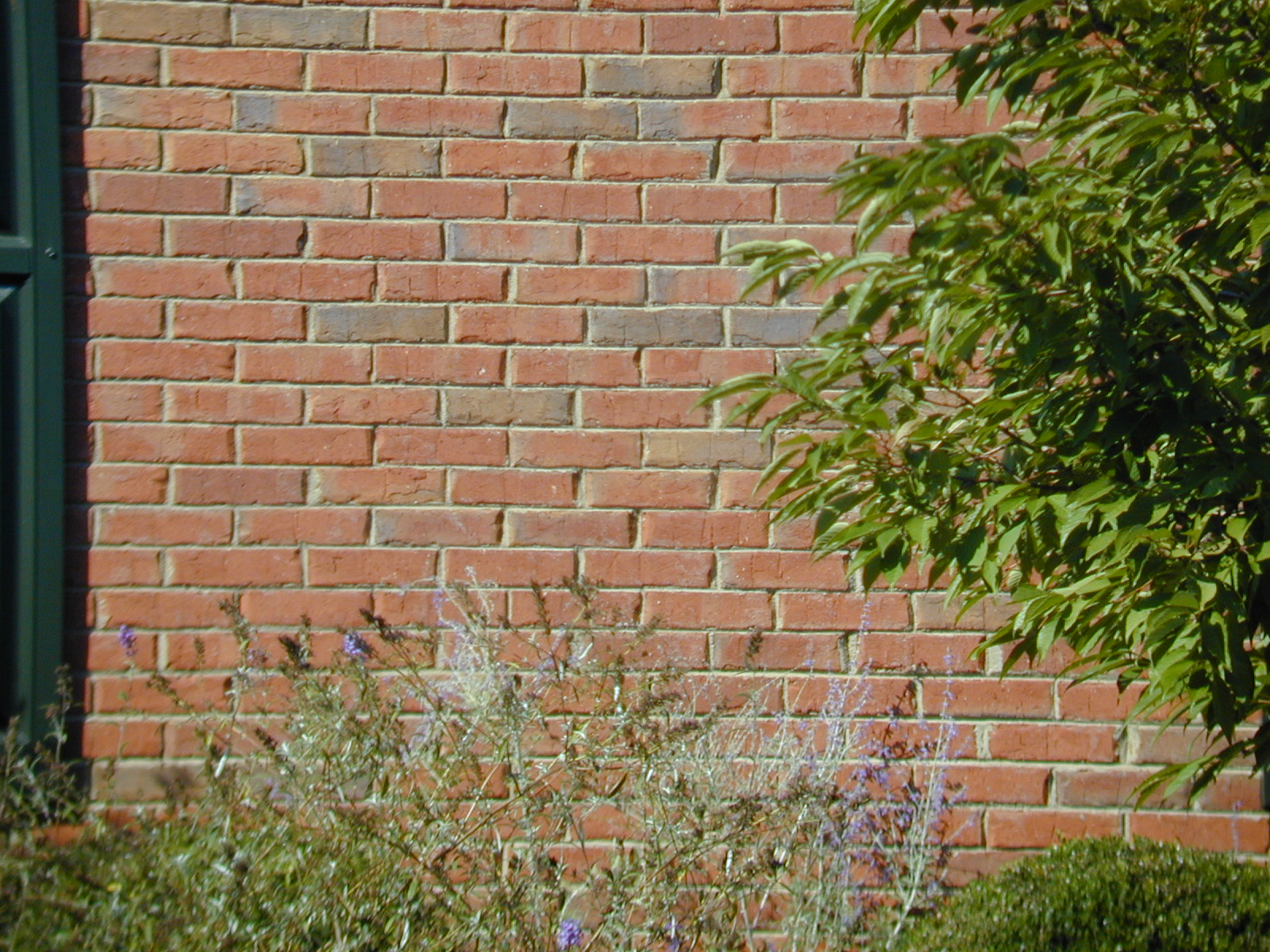
C95WTT2XB 2x adapter, reframed to put detail in the corners. Corner sharpness is actually quite good. Some pincushion and corner softness (see lower left), and a little softer overall than the built-in zoom itself, but not bad. Relatively little chromatic aberration too. 3x Converter - Contact Sheet C95WTT3XA 3x adapter
C95WTT3XB 3x adapter, reframed. Really surprisingly sharp, excellent optical quality. Similar pincushion, corner softness, etc, but not bad at all.
MPTECU Mike's shot using the TC-E3ED on a close subject with distant blurring Copyright 2000 by Mike Pasini
THE EAGLE EYE OPTIZOOM
The Eagle Eye 5x OptiZoom is an exceptionally well-machine unit that provides 5-times magnification.
The OpticZoom, as a converter, itself does not zoom. Zooming is done by the built-in zoom, with some vignetting at the widest setting.
The 5x OptiZoom But, unusual for an auxiliary lens, it has a focusing adjustment on its barrel. What this really does is set the focusing range, not so much the exact focus (which the camera's autofocus itself does). You really don't have to fiddle with this except perhaps at the beginning of a shoot, to set it to cover the general range in which the subject will be. You'll clearly need to twiddle it if you switch from infinity to macro shooting, but the camera's own focus seems able to handle a pretty reasonable range once you've got it in the ballpark.
Eagle Eye claims that only about one stop is lost by the OptiZoom and that "in certain circumstances it actually gathers more light than the native camera lens alone."
Close focus is between 12 and 15 feet. But by adding a 37mm-threaded close-up lens screwed you can focus as close as 2 inches at 15x magnification.
Nikon users (it does fit a wide range of digicams) will really want to order the Wing bracket along with it. This screws into the tripod socket, and supports the lens, taking weight off the swivel assembly. Without it, you'd have to manually hold the lens up, making jiggle-free exposures pretty difficult.
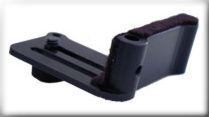
The Wing Support
The optical characteristics clearly aren't up to those of the Nikon units. There's more pincushion, more chromatic aberration, and more corner softness.
Still, if you need to really reach out and touch someone, this is the gadget to do it with, and the build quality of it is really exceptionally high for an aftermarket digicam accessory.
5x OPTIZOOM - Contact Sheet C95WTTEEA EagleEye 5x OptiZoom tele adapter from Eagle Eye optics in Great Britain
C95WTTEEB Reframed again to show more bricks
Close-up Comparison DSCN0407 Perhaps of interest to skittish herpetologists and others interested in at-a-distance macro shooting, a normal telephoto shot from about 4 feet away
DSCN0406 Shot from the same location but with the Eagle Eye attached
Range Comparison DSCN0408 The built-in zoom at wide angle
DSCN0409 The built-in zoom at telephoto
DSCN0410 The OptiZoom with the built-in zoom at telephoto